
What it takes to build materials for a fusion machine
Cecile Mejean, Director of Materials Science
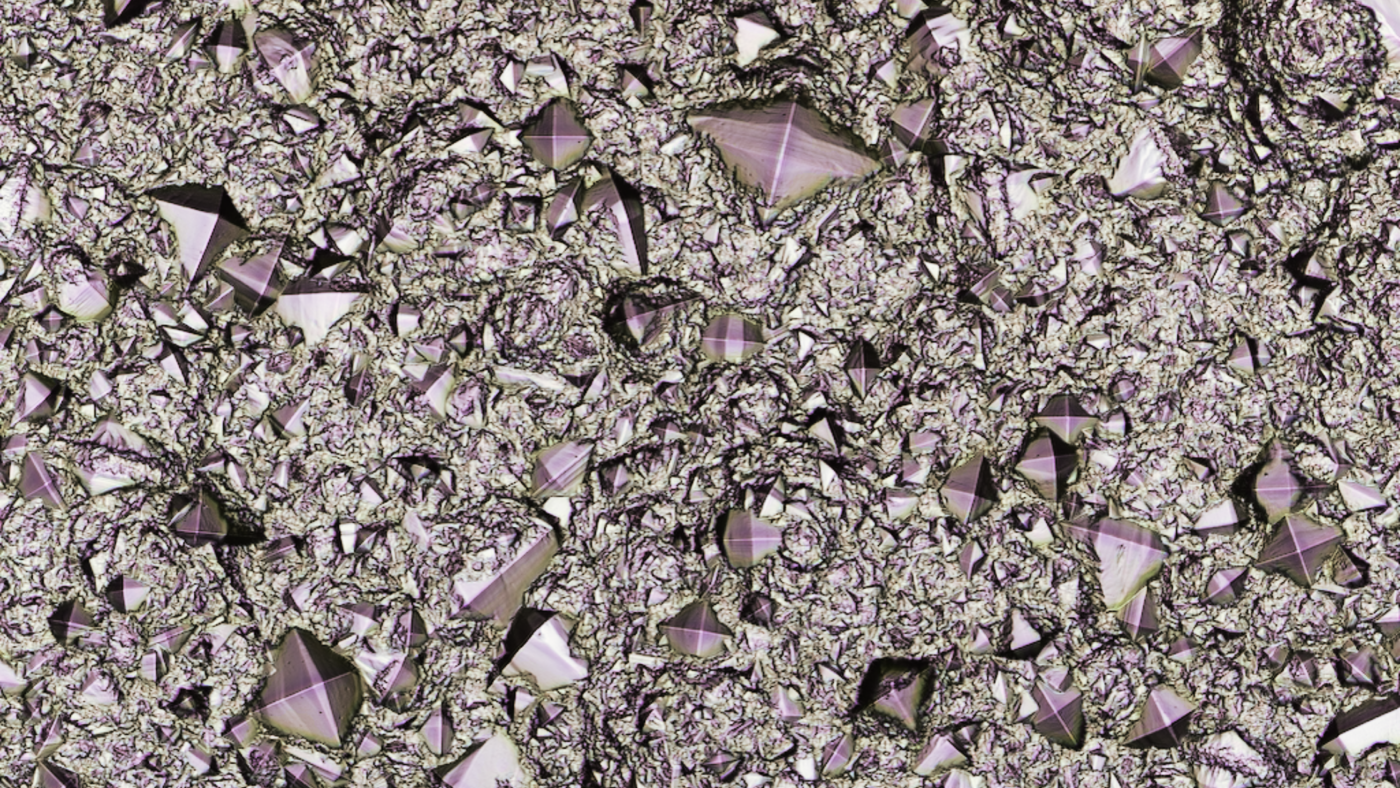
What materials can support a star on earth? Bringing fusion electricity to the grid is a world-changing challenge, and materials sit at the center of it. They determine whether a fusion machine can withstand extreme heat, radiation, and mechanical stress, pulse after pulse.
Polaris, our 7th prototype, is designed to prove pulsed operation and validate the engineering that matters most at scale. For Polaris, we selected materials suited to proving that mission. But moving from prototype to commercial machines dramatically increases what we ask of our materials in terms of performance and lifetime.
At Helion, we approach this challenge from the inside out, literally: first, the chamber surrounding the fusion plasma, also known as the first wall; second, the electromagnets that manipulate the plasma and drive our process; and finally, the insulators keeping high voltage where it belongs. Each section faces its own extreme environment and requires customized testing to ensure the materials we choose can reliably withstand those conditions over the lifetime of the machine.
The first wall: where plasma meets reality
The first wall sits in an unforgiving place. It is the layer closest to the plasma. While the majority of the plasma doesn’t actually touch the wall due to magnetic confinement, the first wall still experiences stray plasma particles, extreme radiation exposure, as well as thermal and mechanical stress.
Therefore, some of the important first wall material characteristics include thermal shock resistance, compatibility with active cooling, mechanical strength at elevated temperatures, and acceptable thermal conductivity under Helion’s irradiation conditions. Surface heating with photons, combined with volumetric heating from neutrons, requires the first wall to be actively cooled to maintain its temperature in a desired range.
Helion uses a large quartz tube as a first wall in Polaris. However, the sublimation temperature and thermal conductivity of quartz under radiation makes it an ineffective long-term solution.
For future machines, we are testing silicon carbide (SiC) or silicon carbide composites. The reasons are exactly the kind of multi-variable constraints that define fusion engineering: having good performance in radioactive environments, being resistant to erosion, maintaining mechanical strength at elevated temperatures, having a low atomic number to avoid plasma poisoning, and more.
The insulators: containing electric fields under extreme conditions
If the first wall is the hardest materials challenge, insulators are right behind it. Because Helion’s system operates at extremely high power and voltage during each pulse, our components must have very high dielectric strength, meaning they can withstand intense electric fields without breaking down or allowing current to arc through them.
Traditionally, industries use polymers for high-voltage insulation. However, polymers degrade quickly under consistent neutron exposure. Polymers are long, tangled molecular chains – think of tangled headphone cables. If you start chopping those chains up, they become less tangled and can fall apart quite easily or create additional connections leading to a brittle structure that can break easily. Neutrons effectively cut those chains, and the material loses structural integrity.
Metals and ceramics have more ordered lattices, and while neutrons still displace atoms, the damage mechanisms are different and can be less destructive. That is why inside the shield wall, generally every non-metal component must be ceramic.
Why engineered ceramics win
The ceramics we are using at Helion are engineered ceramics: metal oxides, carbides, nitrides, and borides. They are made from high-purity powders refined from natural sources, pressed into shapes, then sintered in a furnace around 1000°C to 2000°C. The compacted powder is densified to 95% and greater of the theoretical density after sintering.
These materials are extremely hard, chemically stable, electrically insulating, and have a very high melting temperature. In addition to the properties above, the ceramics we want must also survive the repeated mechanical shock from pulses, like designing a skyscraper to be earthquake-proof.
From materials selection to engineering confidence
In fusion, selecting a material is only the starting point. What ultimately matters is whether it survives our machine conditions, pulse after pulse, without degrading performance or limiting lifetime. As Helion moves from prototypes toward commercial systems, testing is how materials research becomes engineering confidence.
For the first wall, one of the key questions is how a material behaves in a pulsed electromagnetic and plasma environment. To answer that, Helion built a dedicated experimental platform to study first-wall materials under realistic magnetic pulses. In this setup, copper coils generate a fast-changing magnetic field that induces currents on the surface of a sample. Those currents create resistive heating, which represents energy loss in a commercial machine. Plasma is added to make the test more realistic. Plasma can carry current and interact electrically with the surface, so the team evaluates whether materials show arcing, abnormal surface behavior, or unexpected electrical losses.
In pulsed experiments with plasma present, silicon carbide performs as expected, with no visible arcing or abnormal surface effects, and with electrical losses that stay within the tight budget required. These results reinforce why low-atomic-number, electrically insulating ceramics like silicon carbide are strong candidates for Helion’s first wall.
For insulators, the challenge is to survive large electric fields at elevated temperatures, in radiation, while the machine experiences mechanical shock from each pulse. Testing insulator materials starts with dielectric strength, placing ceramic samples between electrodes and increasing voltage until breakdown to measure how much electric field they can withstand. Then, their mechanical strength properties are evaluated as ceramics tend to be brittle, and accelerated irradiation is used to study how electrical and structural properties evolve with radiation exposure over time.
These tests have revealed a clear separation between material classes. Polymer-based materials can meet dielectric requirements at first but degrade rapidly under neutron irradiation and lose their insulating capability. Engineered ceramics maintain high dielectric strength at temperature and show far greater stability under radiation and pulsed loading. Ongoing work is focused on confirming that they do not develop radiation-induced conductivity, since even small shifts in electrical behavior could create a short circuit between components under high-voltage, reinforcing the move toward fully ceramic insulation inside the shield wall.
Fusion materials as a design philosophy
There is a common theme across all of this: we do not get to pick a material in isolation. We choose and evaluate it as part of a system that pulses, carries huge currents, lives in radiation, and must be economically manufacturable.
That is what makes Helion’s materials work exciting. The challenge is that the overlap of high voltage, radiation, and high temperature is unusual, so there is limited reference literature for ceramics. Our team is responsible for researching, developing, testing, and deploying these materials. If you want to work on problems where physics, materials science, and design meet directly, and where your results move from the lab into a power plant, Helion is hiring.
The path to commercial fusion will take us beyond creating plasmas in extreme conditions. We need to engineer materials that can survive and thrive – reliably, economically, and pulse after pulse.