
The technicians building fusion
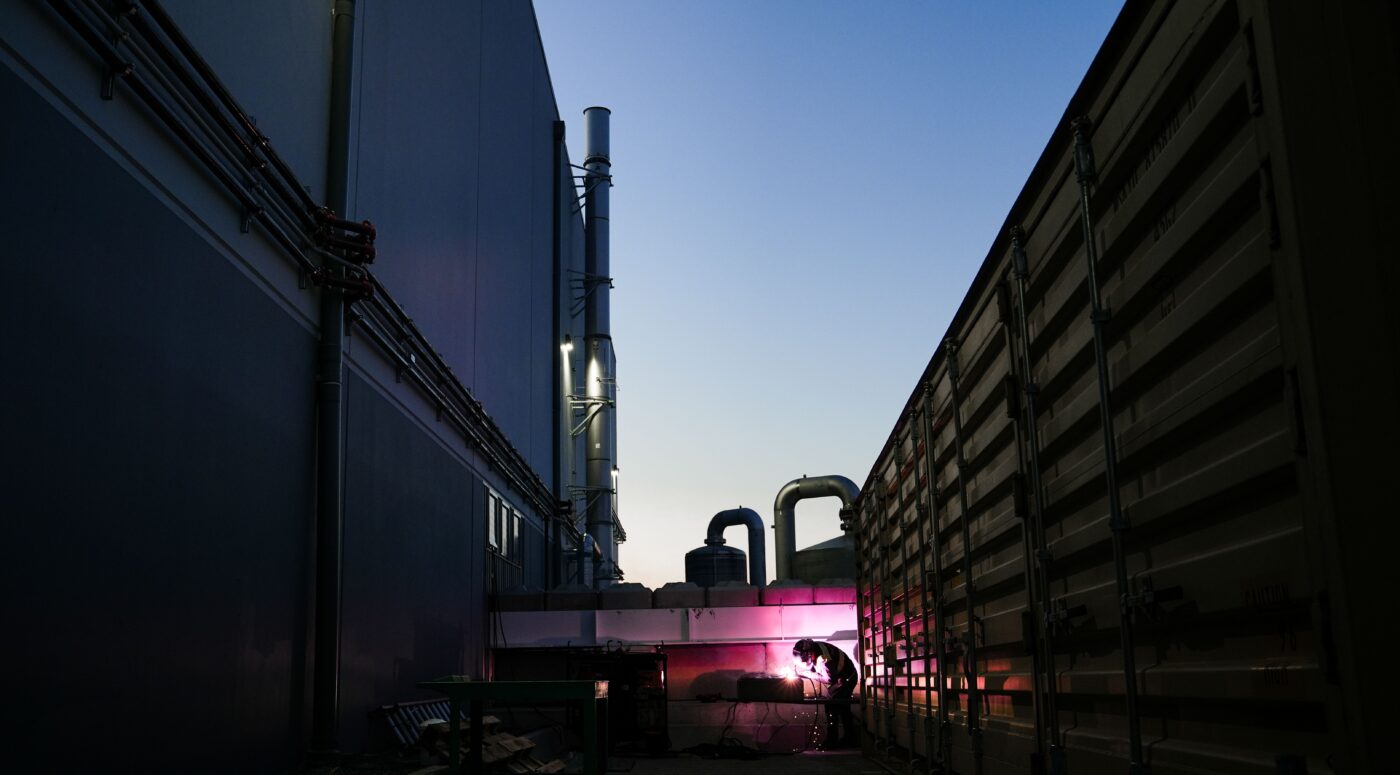
When you think about a fusion energy company, it’s easy to imagine a room full of plasma physicists. But building fusion machines takes a much broader team. Our prototypes and generators are physical systems built from thousands of components that must work together under extreme electrical and mechanical conditions. Turning those ideas into working machines requires teams of technicians who assemble, test, and improve the hardware that makes fusion possible.
Our technicians come from a variety of career paths, bringing hands-on skills from various industries. Their perspectives, together with the hiring managers building these teams, highlight what it takes to build fusion, how those diverse skills translate directly into this work, and why technicians are essential to turning fusion from science to reality.
Finding a path into fusion
Dee Robinson, Senior Engineering Technician, Machine Production and Installs
My road into fusion energy did not begin in a laboratory or research facility. Before joining Helion, I built my career across several hands-on roles that demanded attention to detail and adaptability. I spent years detailing vehicles for Mercedes-Benz, worked as a low-voltage electrical installer, fueled aircraft at Seattle–Tacoma International Airport, and even spent a season commercial fishing on a long-line vessel in the Bering Sea. Each experience required precision, teamwork, and the ability to perform under pressure.
When I first applied to Helion, the company was still small and the role I was considering offered few clues about what the work would ultimately involve. At the time, I had no idea what I was getting into.
Like many technicians entering the fusion field, I quickly found myself learning new systems and technologies on the job. Over time, I became part of the teams assembling the prototypes that formed the backbone of Helion’s fusion progress. Seeing those systems come to life made the significance of the work clear. I was proud of the work I had done on Venti, and seeing something I helped build actually turn on and work was incredibly exciting. When we completed Trenta and started breaking records, I felt a strong sense of accomplishment.
Moments like these reinforce the fundamental work technicians do at Helion by helping translate ambitious scientific goals into real hardware.
The work behind the machine
Vince Giacalone, Production Manager, Integration
My path into fusion may seem unconventional, but it reflects a broader pattern within Helion’s workforce. Many of us arrive with practical mechanical experience developed in other industries and discover that those skills translate well into building advanced energy systems.
After earning a mechanical engineering degree from Washington State University, I spent several years working aboard commercial fishing vessels that traveled across the Pacific Ocean. Life at sea required constant troubleshooting of complex mechanical systems and the ability to adapt quickly when something failed.
Eventually, I moved into manufacturing, working for a company that designed and produced refrigeration equipment used by the fishing industry. That role introduced me to the challenges of building complex hardware in a production environment.
When I later encountered Helion, the opportunity to apply those experiences to a technology with global implications immediately stood out. Walking through the facility for the first time, I felt an energy in the atmosphere that is hard to describe, a kind of focused enthusiasm that made it clear this was a team I wanted to be part of.
Today I work with teams responsible for integrating and assembling components used in Helion’s machines. Despite the advanced physics behind fusion energy, the work itself still relies on practical engineering fundamentals. It is a high-tech field, but at the end of the day, we still use nuts and bolts.
Technicians at Helion are not only responsible for assembling hardware but also for helping develop it. In many cases, we design and fabricate custom components and contribute ideas that improve how systems are built and operated. This makes the types of technicians that work at Helion unique in being able to go above and beyond traditional manufacturing processes to help improve them and the components that are being assembled and built.
Hiring builders, not just specialists
Esther Walker, Talent Acquisition Partner
Because fusion remains a relatively new industry, we cannot rely on a large workforce with direct experience building fusion generators. Therefore, we focus on identifying people with the right mindset and transferable skills.
Rather than searching exclusively for candidates with specialized backgrounds, I look for curiosity, a willingness to learn, the ability to take feedback, and strong attention to detail. People who are eager to learn and driven to figure things out tend to be the ones who succeed at Helion.
The technicians we hire come from industries where hands-on mechanical skills are part of everyday work. Automotive repair, aerospace manufacturing, electric vehicle production, and warehouse operations are all examples of environments where people develop the practical expertise that translates well to building fusion hardware.
At the core of Helion, we are all builders, and taking your skills to build things in other industries translates well here.
From first-of-a-kind to building fusion at scale
Sofia Gizzi, Director of Production, Module Manufacturing
As we move closer to commercializing fusion power, the importance of technicians continues to grow. Building a single experimental machine requires coordination between engineers, scientists, and manufacturing teams. Building fusion generators at commercial scale will require an even deeper level of expertise on the production floor.
Technicians play an extremely critical role at Helion. Across our production teams, technicians assemble and test the systems that make fusion generators possible. That includes building capacitor banks capable of delivering enormous electrical pulses, assembling high-precision vacuum chambers, installing magnets, and performing high-voltage testing. Technicians work closely with engineering and science teams as designs evolve and new hardware is introduced.
Because fusion technology is still advancing rapidly, much of the work involves building hardware that has never existed before. That environment rewards people who are comfortable learning quickly and improving processes as they go. Many technicians contribute directly to refining assembly techniques, identifying better tooling, and improving how systems are built.
Career progression for technicians at Helion is not limited to a single path. Some technicians develop deep specialization in niche areas, while others move across teams into roles that span production, R&D, and engineering support. Career growth often includes developing expertise in continuous improvement, influencing tooling and work instructions, and training others. We are structured to support multiple paths, allowing people to continue advancing as highly skilled technical contributors or grow into team leaders, depending on where they want to take their careers.
Building the future of fusion
Getting fusion energy to the grid will require machines that can be built, improved, and eventually manufactured at scale. Every capacitor bank assembled, every vacuum chamber installed, and every system tested moves fusion one step closer to becoming a practical source of power.
Technicians are central to that effort at Helion. They translate engineering designs into real hardware while working alongside engineers and scientists as the machines continue to evolve. Rather than following fixed, long-established procedures, they are helping define the processes, tools, and techniques needed to build fusion systems.
The machines being assembled today are the first steps toward commercial fusion power. Helion’s technicians are helping shape how an entirely new energy industry will be manufactured in the future. Visit our careers page to see how you can take part in this important mission.