Rolling metal into magnet strength

Taylor Jacobs, Materials R&D Engineer


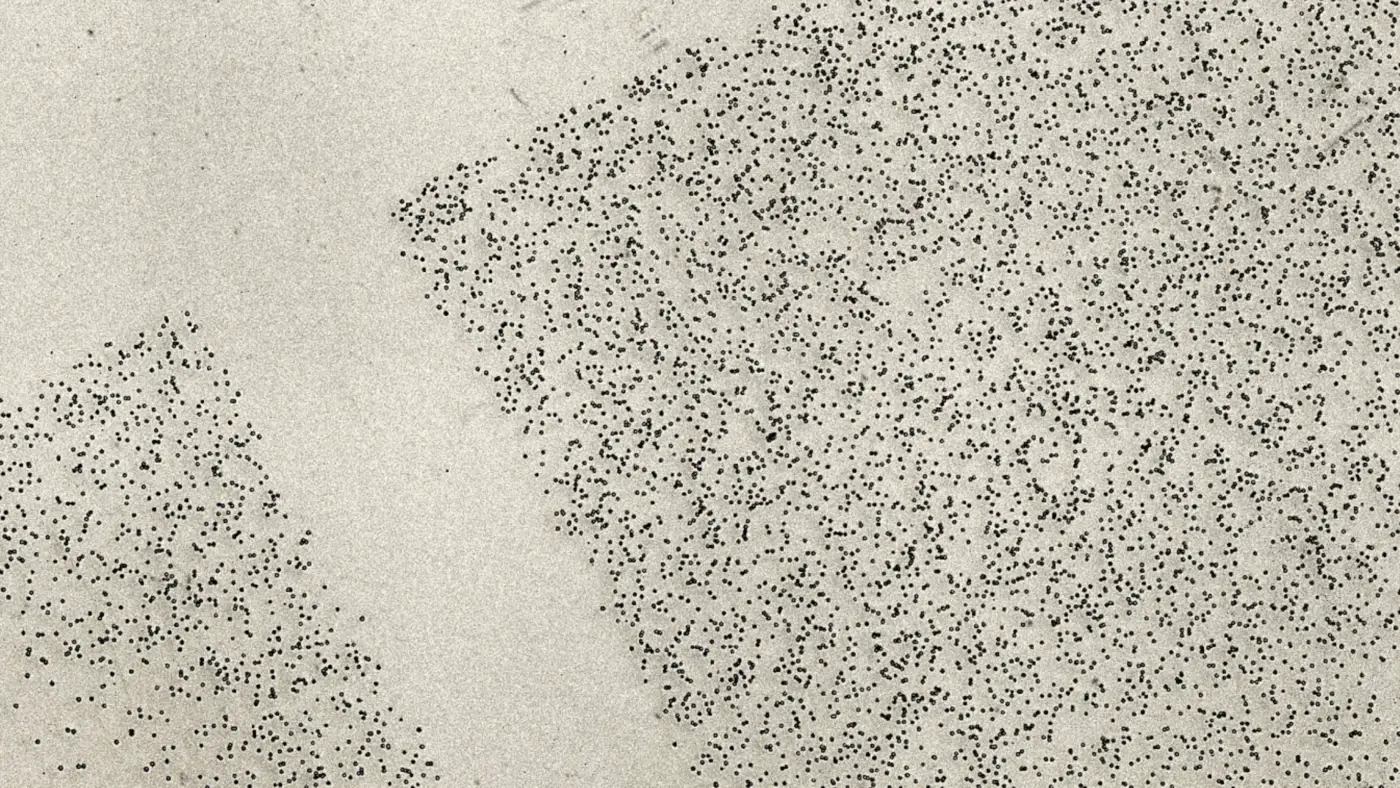
The microscopic view of nanolaminate

Electromagnets are a key part of Helion’s fusion machines because not only do they shape, accelerate, and compress the plasma, they also help recover energy as the plasma pushes back on the magnetic field. As part of the power conversion system, each pulse subjects the magnets to large electromagnetic forces and therefore they must also be mechanically robust. That combination turns magnet conductors into a materials problem, not just an electrical design choice. A couple of the most promising ways we have found to overcome the usual strength-conductivity tradeoff include improving our existing high-strength metal alloys and a new method for developing nanolaminate conductors. 


Magnets must be both strong and efficient 


If you want to build a high-strength pulsed electromagnet, the first thing to accept is that higher field means higher force. Especially as you push past 15+ Tesla, the magnet is not only applying force to the plasma; it is also experiencing the equal-and-opposite reaction. The current in the coil interacting with its own magnetic field produces a Lorentz force that pushes back on the conductor in the magnet, effectively creating an outward pressure on the wound conductors and the structure holding them together. If that pressure exceeds the material’s strength, the magnet can undergo a rapid mechanical failure.  


Strength alone is not enough, though. We also need electrical conductivity to minimize resistive heating and circuit loss, but most metal strengthening methods reduce electrical conductivity. Magnet conductivity is often defined using a percentage of IACS (International Annealed Copper Standard), with pure annealed copper at room temperature being 100% IACS. Copper is an excellent conductor, with strength up to 350 MPa after a significant work-hardening process, which is far from the 1 GPa needed for our application. Our goal is to develop new magnet conductor materials with strength in the GPa range and conductivity around 75% IACS.  


In prototype systems, we use alloys which offer a practical balance of strength, conductivity and manufacturability. However, commercial fusion systems require even stronger electromagnets to withstand operational conditions without incurring large resistive heating and electrical losses. That is the motivation for our magnet development work, which follows two paths: improving high-strength copper alloys and developing nanolaminate conductors that get strength from structure rather than heavy alloying. 


Two approaches to stronger magnets 


The first route Helion is exploring involves alloying combined with controlled processing. Copper-silver alloys are a common example in the pulsed-magnet literature because they can achieve high strength. The challenge is that they are often process-sensitive. Achieving the desired combination of strength and conductivity can require large plastic strains and tight heat-treatment control, and those constraints become more difficult as part sizes grow. 


The second is to avoid heavy alloying and instead use microstructure as the strengthening tool by building a nanolaminate conductor from pure metals. This way, we can use pure metals, which provide the best conductivity, and then build strength through architecture rather than chemistry. 


Accumulative Roll Bonding (ARB) is the process we use to manufacture that nanolaminate architecture. ARB begins with two pure metal sheets that are cleaned and intentionally roughened, then rolled together at high pressure until they bond metallurgically. The bonded sheet is then cut, stacked, and rolled again repeating the cycle many times. One way to picture the process is like making a metal croissant: copper forms the “butter” layers, while the second metal, such as niobium or iron, forms the “dough.” Each pass through the rolling mill multiplies the number of layers and thins them, taking layer thickness from millimeters to microns and ultimately down to the nanometer scale. 


At very small layer thicknesses, strengthening mechanisms change because grains and deformation pathways are constrained by dense interfaces. In lab-scale coupons, this type of nanolaminate architecture can push toward the strength levels needed for pulsed magnets while retaining moderate-to-high conductivity relative to many conventional high-strength alloys. 


ARB is also attractive for another reason relevant to fusion environments. Neutron irradiation creates defects in metals by displacing atoms from lattice sites. A dense network of interfaces can act as sinks for those defects, potentially improving radiation tolerance by shortening the distance defects must travel to recombine or be absorbed. That is not a substitute for shielding and lifetime planning, but it is a meaningful design lever when components must operate near neutron-producing plasmas. 


The real challenge is scale 


The difference between a promising lab-scale material and a useful magnet conductor is manufacturing. Helion has demonstrated the ability to produce long (over 200 feet!) ARB strips with the desired nanolayer structure. Reaching that length moves nanolaminate conductors beyond prototypes and toward manufacturable magnet stock. Current work is focused on increasing conductivity without sacrificing strength, including methods to build thicker plates and to combine sheets while maintaining good electrical contact.  


A material choice is a machine choice 


The challenges with developing and testing materials for magnets mirrors what we see in other parts of the machine, including the ceramic first wall and high-voltage insulators. We do not choose a material in isolation. We choose it as part of a system that pulses, heats, carries enormous current, experiences rapid mechanical loading, and must be manufacturable at commercial scale. For pulsed electromagnets, the conductor is where those constraints collide, which is why we are developing nanolaminate conductors alongside more conventional alloys. Turning those concepts into scalable, repeatable hardware is where materials engineering becomes one of the enabling technologies for fusion.