Why subscale systems are critical to commercial fusion deployment
June 9, 2026
Dr. David Kirtley
CEO
Iteration is the name of the game when it comes to scaling
Achieving practical fusion power is one of the most complex engineering challenges humanity has ever taken on. Success depends not only on breakthrough physics, but on the disciplined integration of thousands of highly specialized components working seamlessly together. That reality has shaped our approach at Helion. We've made a deliberate and, at times, an unconventional choice to invest deeply in subsystems.
The case for subsystems
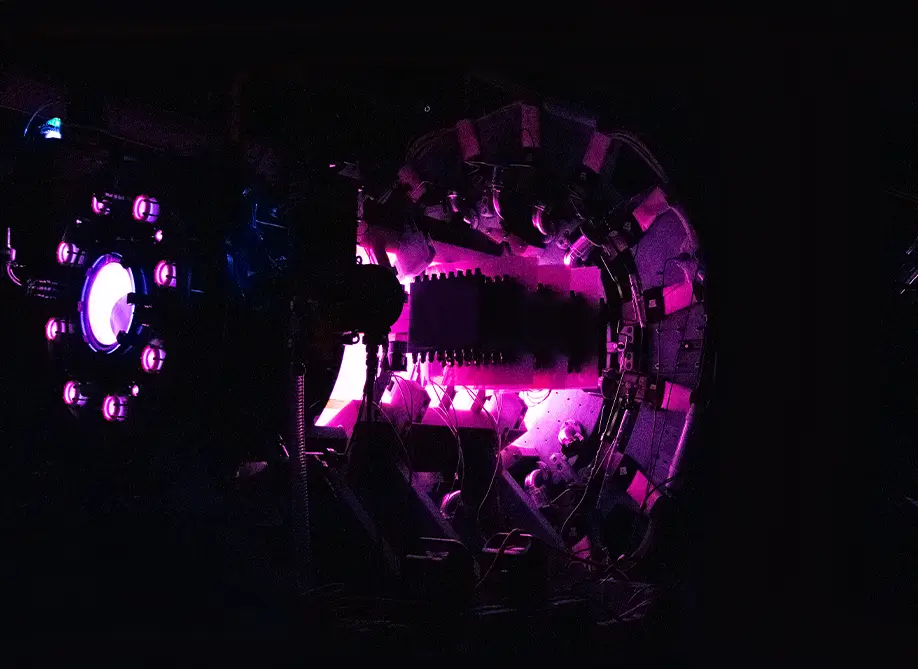
Helion’s magneto-inertial fusion technology machines are relatively compact compared to traditional fusion machines, like inertial (laser) facilities or tokamaks, which require enormous lasers, superconducting magnets, and/or cryogenic infrastructure, but even a “compact” fusion system is still incredibly complex. Polaris represents a tightly integrated machine where hardware changes are possible mid-campaign, but those changes still require stopping operations, and time is the one thing we don’t have.
We needed fusion energy yesterday, so we optimize for speed. Each pulse generates new data that quickly turns into actionable insights, but testing those insights can’t come at the cost of slowing the core machine. That’s where subscale systems come in.
Subsystem testbeds allow us to focus on specific operating parameters in isolation; this could include things like plasma formation, magnet performance, or material behavior without risking the broader, integrated system or interrupting testing progress. They let us validate ideas more rapidly, fail faster, and integrate only what works in our larger systems.
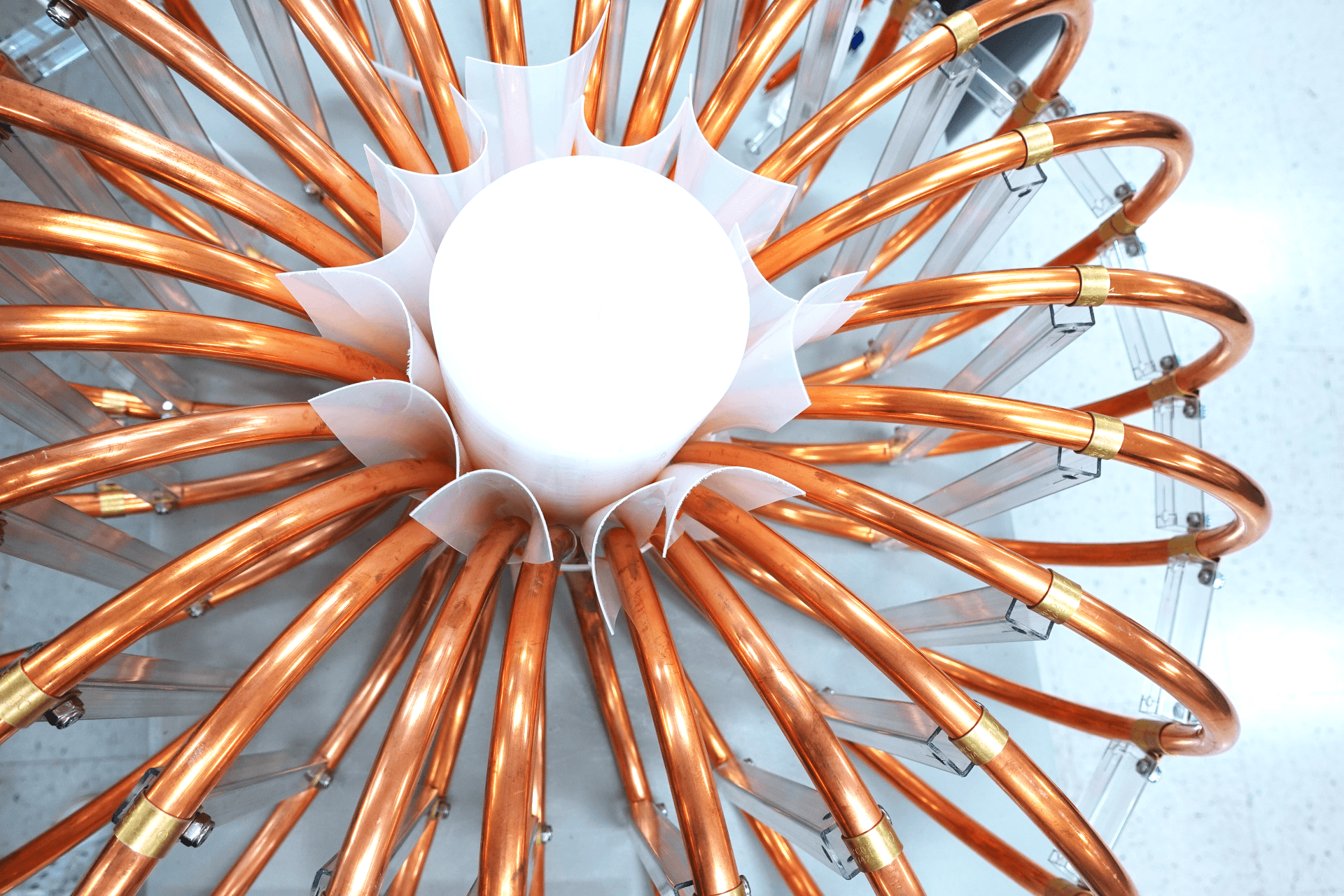
This approach has been embedded in Helion’s development from the beginning. Even our earliest prototypes were supported by smaller test systems designed to answer targeted questions. Today, that philosophy continues alongside Polaris and Orion.
Learning faster with parallel machines
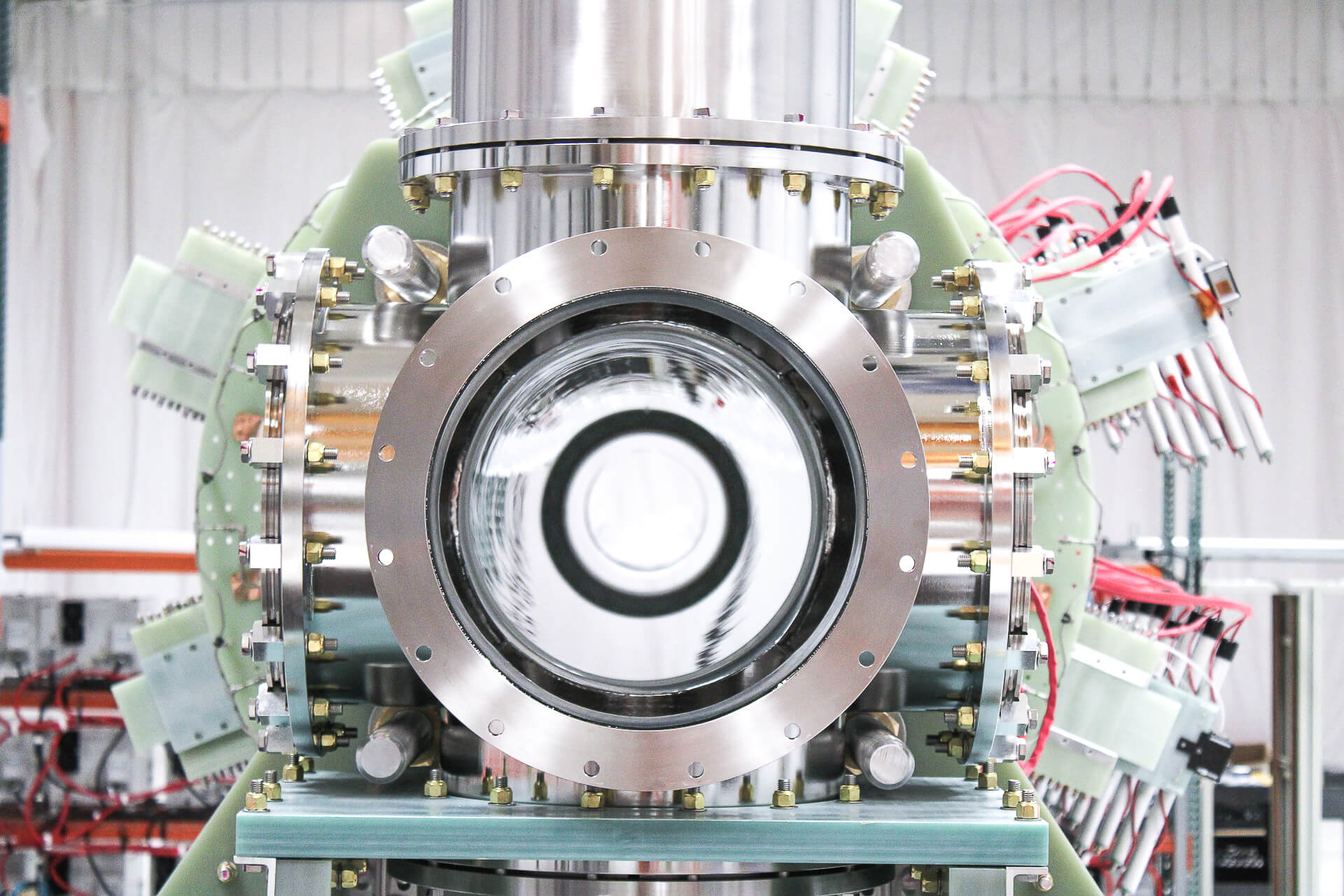
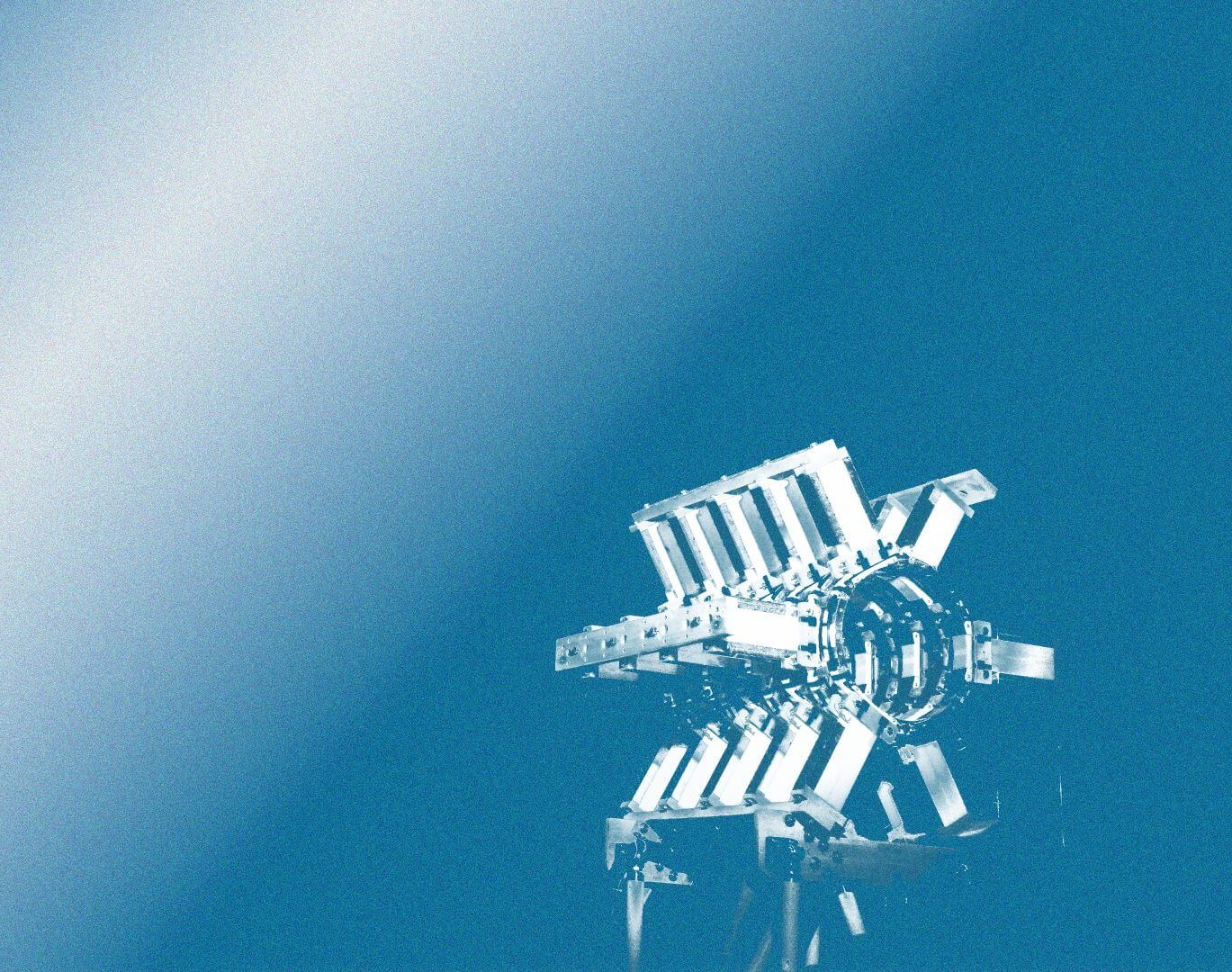
One of the most effective examples of this strategy was Polaris Junior Formation, our formation-section testbed that operated from 2023 to 2025. Built in parallel with Polaris, it allowed the team to refine plasma formation, qualify hardware before full deployment, and train on integration and operations.
We began building Junior Formation right after we completed our largest ever pulsed power test on Vela, which was designed to demonstrate our switching technology repeatedly and at scale. In the end, Vela operated at 1 Hz and moved more than 11 GJ total energy through a simulated Polaris compression magnet, demonstrating that our pulsed power system was on the right path.
More recently, we’ve begun integrating Tiny Merge, a thermonuclear fusion testbed designed to study plasma behavior, merging dynamics, and next-generation magnet designs. Running in parallel with Polaris, it gives us a smaller, faster platform to explore ideas before committing them to the larger machines that will come after Polaris.

These systems are only a few of the many testbeds we’ve operated in the past and will continue building into the future because they fundamentally change how quickly we can learn. Instead of forcing every experiment through a single, mission-critical machine, we distribute risk and accelerate development. The most important improvements make their way into current systems, while longer-term learnings continue to mature off to the side.
A proven engineering pattern
This approach is not revolutionary, but it does fall in line with revolutionary companies, particularly in the space industry. SpaceX’s path to reusable rockets began with Grasshopper, a single-engine suborbital testbed built from the first stage of a Falcon 9 v1.0. The entire purpose of this machine was to demonstrate precise control for vertical takeoff and landing, and it completed eight successful flights through iterative testing and hardware evolution. It lasted for about one year before the team moved onto more advanced testbeds and prototypes, continuing the R&D strategy.
NASA took the same approach with MOXIE in 2021, a toaster-sized oxygen-production experiment aboard the Perseverance rover. MOXIE operated at ~1% of the scale of the technology that would be eventually needed and sent it to Mars where it produced 12 grams of oxygen per hour at 98% purity, surpassing their goals.
Optimizing for commercial scale
We invest in subscale systems for the same reason we vertically integrate and favor rapid iteration over conventional validation cycles like peer-review: because the objective is commercial deployment. In a few years, electrons on the grid will be the only metric that matters. How we get there will be history.
.png)