Fusion fuel: where does it go after fusion occurs?
June 18, 2026
Bryce Alexander
Fuel Cycle Manager
A look into Helion’s closed-loop fuel system
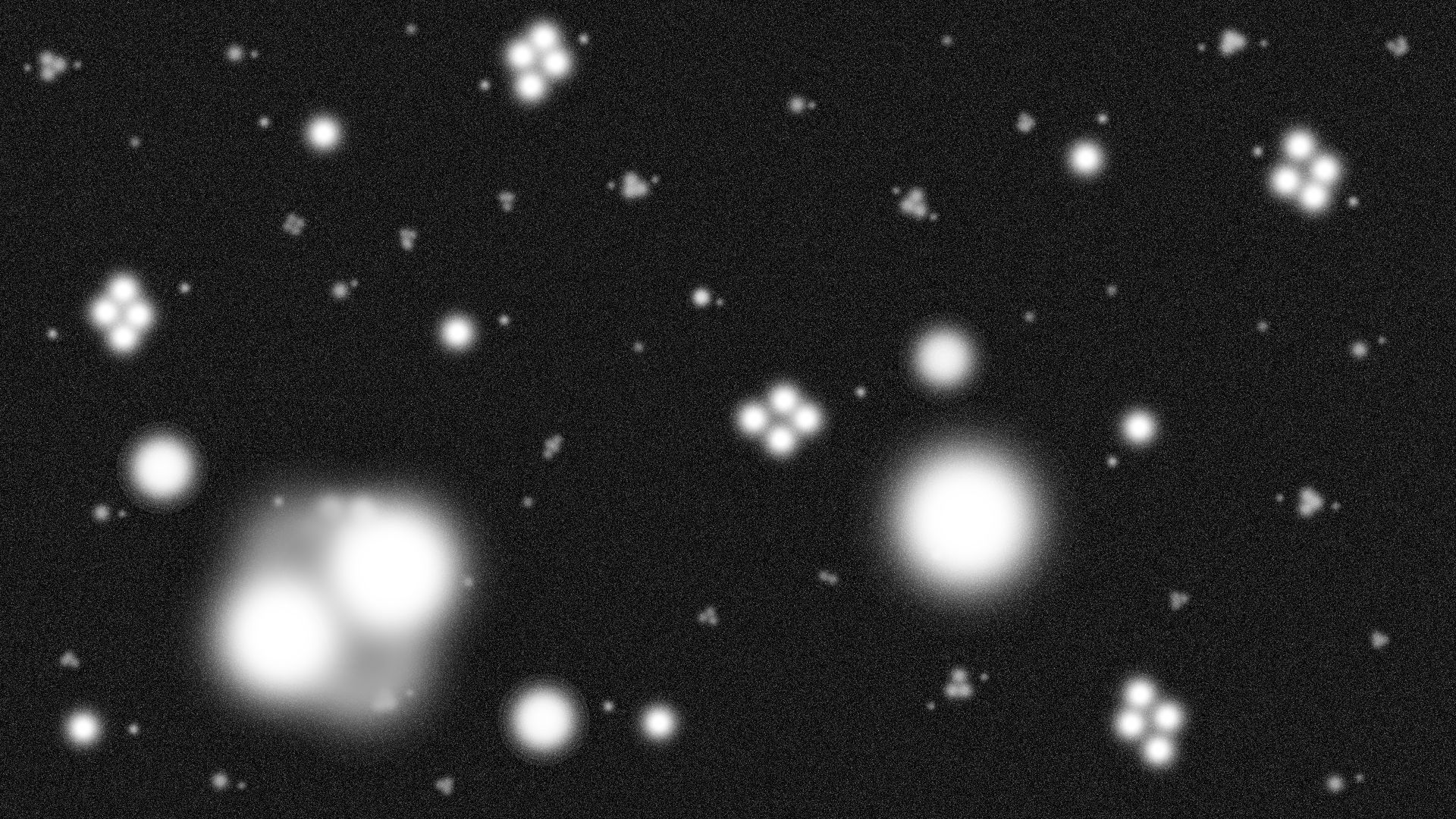
The journey of fusion fuel in Helion’s system doesn’t end when fusion stops; it’s just getting started. In a closed-loop system, it follows a carefully managed path: fuel enters the machine, part of it fuses, the exhaust is captured, the valuable components are analyzed and separated, and the usable fuel is prepared to go back in again. For Helion’s approach, that path begins with a subset of three key fuels—deuterium, helium-3, and tritium—and each one takes a different path following a fusion pulse.
In this article, we explore the path of fuel particles through our pulsed power system and show how they’re recovered and recycled in the fuel cycle for the next round of fusion.
Fuel enters the machine
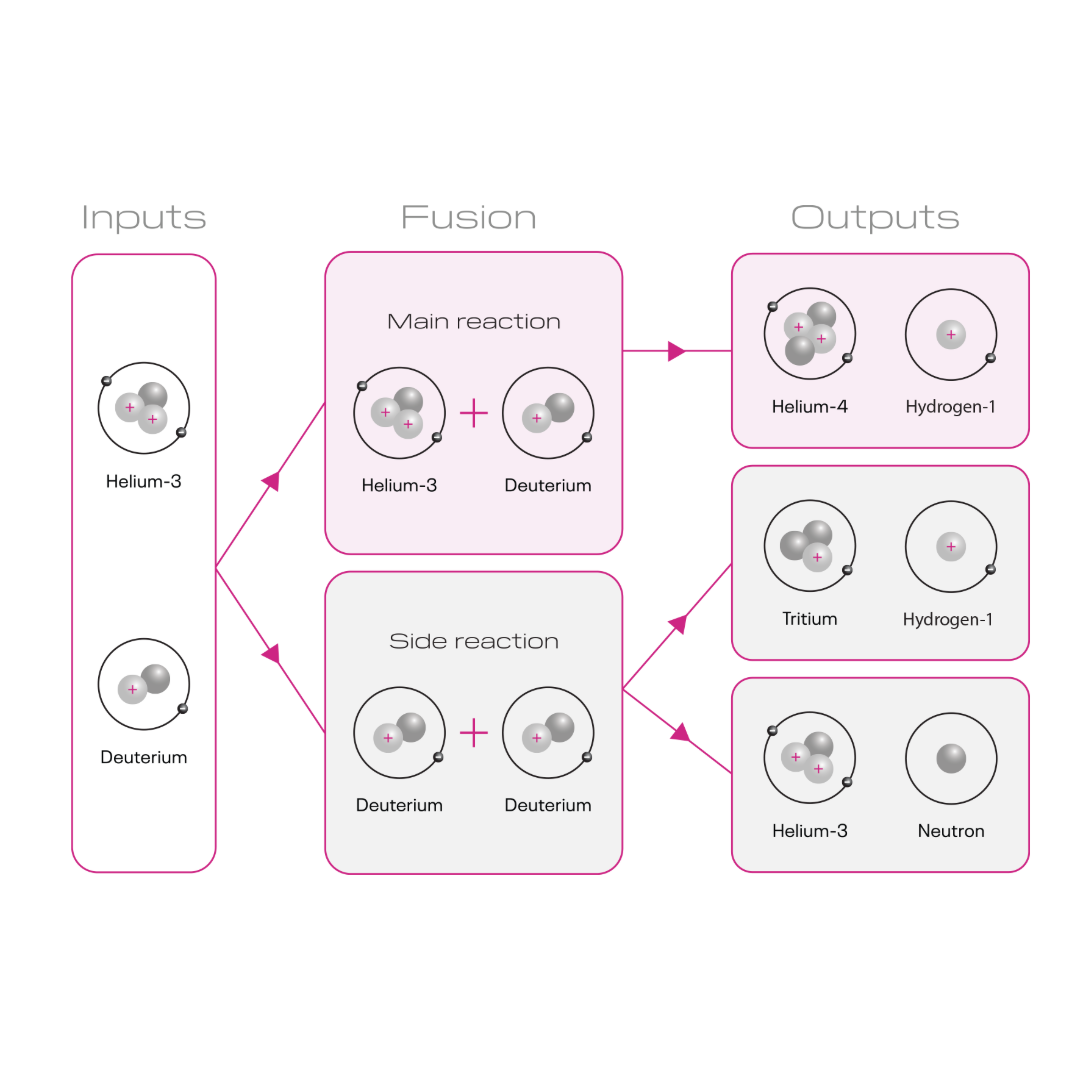
Helion’s machines operate with several fuel mixtures, including deuterium-deuterium (D-D), deuterium-tritium (D-T), and, deuterium-helium-3 (D-He-3). Gas is injected into the machine, where it is ionized into a plasma, and is accelerated, merged, and compressed to fusion conditions. At that point, one of two things happens: a particle either participates in fusion or it doesn’t.
If it fuses, it becomes a new particle: a helium isotope, proton, neutron, or tritium. If it doesn’t, it remains as unburned fuel.
Exhaust leaves the machine
After each pulse, most of the plasma cools back into gas and flows toward the ends of the machine as exhaust through divertors on each end of our machine. These divertors shape the exhaust path, guiding ionized particles toward regions where they can be removed efficiently. Vacuum systems then pull neutral gas out of the machine using turbomolecular and roughing pumps to move the gas from extremely low-pressure, high-vacuum conditions toward higher pressures where it can be processed.
Exhaust is analyzed
Once removed from machine, the pumped exhaust stream consists of a mixture of unburned fuel, fusion products, and impurities. Some examples of these include:
- Unburned fuel (deuterium, helium-3, tritium)
- Fusion products (helium-3, helium-4, protons, neutrons, tritium)
- Impurities (trace gases like nitrogen, oxygen, argon, water vapor and carbon dioxide from vacuum conditions)
A combination of diagnostics maps out this mixture. Raman spectroscopy is used to identify the composition of the different hydrogen isotope combinations, including H2, HD, HT, DT, D2, and T2 by taking a small gas sample, shining a laser into it, and measuring the wavelengths that return as molecules vibrate. Gas chromatography and mass spectrometry are also used to identify the total amounts of hydrogen isotopes, helium isotopes, and impurities in the mixture.
These measurements support process control, fuel accountancy, and safety. We need to know how much fuel remains, how much was created through fusion, and what needs to be separated before anything goes back into the machine.
Separation: Turning exhaust particles back into useful gasses
After analysis, the gas stream moves into separation processes. Here, the goal is to purify and recover useful fuel isotopes and remove contaminants that will degrade fusion performance and should not return to the machine.
The exhaust stream can be separated into three distinct streams using a combination of permeation membranes, cryopumping, or catalytic conversion.
Stream 1: Hydrogen isotopes
Hydrogen, deuterium, and tritium can be separated using methods like thermal swing adsorption and cryogenic distillation.
Stream 2: Helium isotopes
Helium-3 and helium-4 can be separated using techniques such as thermal diffusion columns or cryogenic distillation.
Stream 3: Impurities
Impurities like oxygen and water vapor are separated, scrubbed to remove residual tritium, and then released back to the environment.
Once purified, the recovered fuels are routed back to fuel management systems, where they can be stored, blended, and prepared for reinjection.
Handling Tritium
A nuance for working with tritium is that it is a radioactive byproduct, and therefore safe tritium handling is designed into each stage of the fuel cycle. It is contained initially in gloveboxes and then stored and transported on getter beds—metal materials that absorb hydrogen isotopes like a sponge and hold them in a safer, solid-bound form until heat is used to release them.
Additional protection is provided by the tritium scrubber system. This system serves as a fault-tolerant safeguard, capable of capturing tritium in the event of an abnormal release. Tritiated air is routed over a catalytic oxidation and adsorption system, where hydrogen isotopes are converted into water and captured. Once captured, tritiated material can be handled through controlled processing and storage pathways, using the same broader containment and accountancy principles that govern the rest of the tritium system.
Recycling fuel is what makes fusion systems commercially viable
By capturing exhaust, separating valuable isotopes, and returning them to the machine, Helion’s closed-loop fuel cycle turns fusion fuel into a reusable resource. Future commercial systems will move from our current batch-style approach toward a continuous fuel cycle. Larger hydrogen isotope separators and helium isotope separators will route purified fuel streams back to a fuel balancing unit, where valves, pressure vessels, analyzers, and controllers will create the fuel mixture needed for continuous injection. That system will combine a direct internal recycle stream, recovered fuel, and fresh fuel, enabling a path where fuel is continuously measured, adjusted, and returned to the machine for repeated pulsed operation at commercial scale.