Inside Helion's capacitor manufacturing line
October 16, 2026
Aaron Sande
Director of Capacitor Production
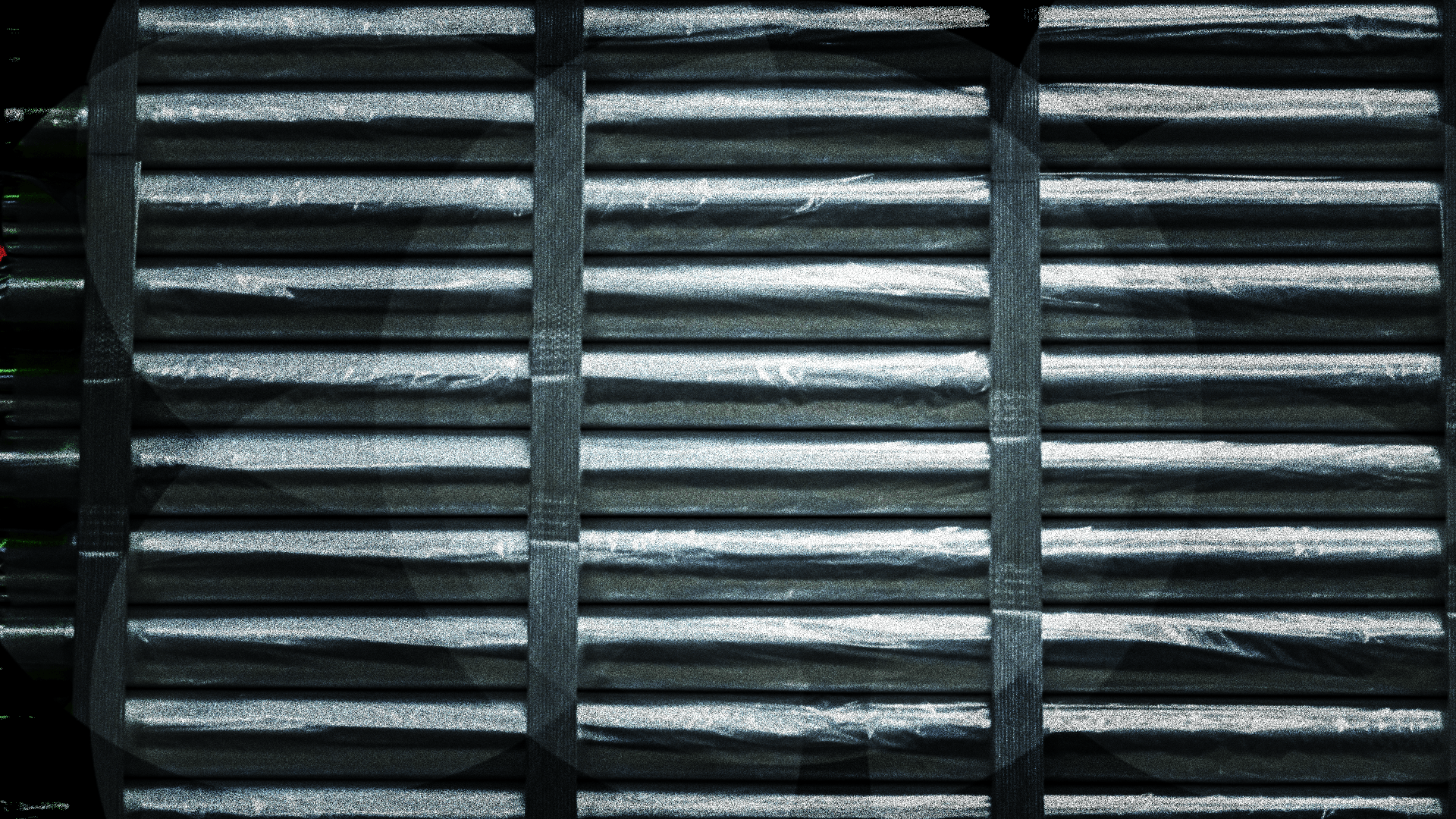
Capacitors make up the heartbeat of Helion’s fusion systems. They store the electrical energy required to pulse the machine, then recover electricity produced from the fusion process. Every fusion pulse starts and ends in our capacitors, and together they deliver over 500 gigawatts of peak power in less than a millisecond.
Our capacitor bank consists of thousands of high voltage pulsed power capacitors, collectively storing over 50 megajoules of energy. Polaris alone uses just under 10,000 capacitors, with future machines set to require even more, making capacitors both essential and highly cost-sensitive components of our fusion systems.
Building and installing that many capacitors at the scale and reliability our system demands has shaped everything from our decision to manufacture them in-house, to the development of a custom production line, to how we assemble them into palletized modules. Each of these pieces is part of how we’re scaling fusion for commercial deployment.
Building capacitors in-house accelerates our deployment pathway
The decision to build our own capacitors came down to three core drivers: reliability, cost, and the ability to rapidly scale up.
By bringing manufacturing in-house, we gained the ability to tightly control every aspect of production. That includes process quality, materials, performance improvements, design for manufacturability, and component testing. This level of control helps ensure that each capacitor meets our reliability targets and contributes to the overall lifetime of the machine. It also gives us the freedom to optimize capacitor design alongside the rest of the system, rather than around the constraints of an external vendor.
Capacitors are also a major cost driver for us. Because of the sheer volume required, even small improvements in cost-per-unit scale to meaningful savings at the system level. We integrate capacitors into module assemblies alongside high-voltage switches, cables, and diagnostics. Manufacturing in-house allows us to improve the cost structure of the machine (and ultimately the cost of fusion electricity) at its foundation, including control over materials, dielectric selection, and insulation strategies that affect long-term reliability and performance.
There’s also a scale challenge. To support future fusion systems, we’ll need to produce capacitors at rates no vendor can match. We estimate that Helion is among the top global producers of pulsed power capacitors by volume. There simply isn’t an external supply chain built for this use case or scale, reinforcing our decision to invest early in building a production capability tailored specifically to our needs.
From the capacitor kitchen to module installation
We started small, in what we affectionately call the “capacitor kitchen.” That name isn’t just a joke about the space – we literally baked prototypes. These thermal processes – drying, oil impregnation, and curing – were performed in machines nicknamed the Air Fryer, Deep Fryer, and Pizza Oven. Each step has a purpose, including removing moisture and testing for leaks under heat.
Our work in the Cap Kitchen has always been scrappy. Initially, it was all we had. Then, we grew our capacitor manufacturing footprint in our HQ, and now we’re in the process of bringing our first custom-built facility for pulsed power manufacturing online, built from the ground up to support commercial-scale production.
Introducing Omega
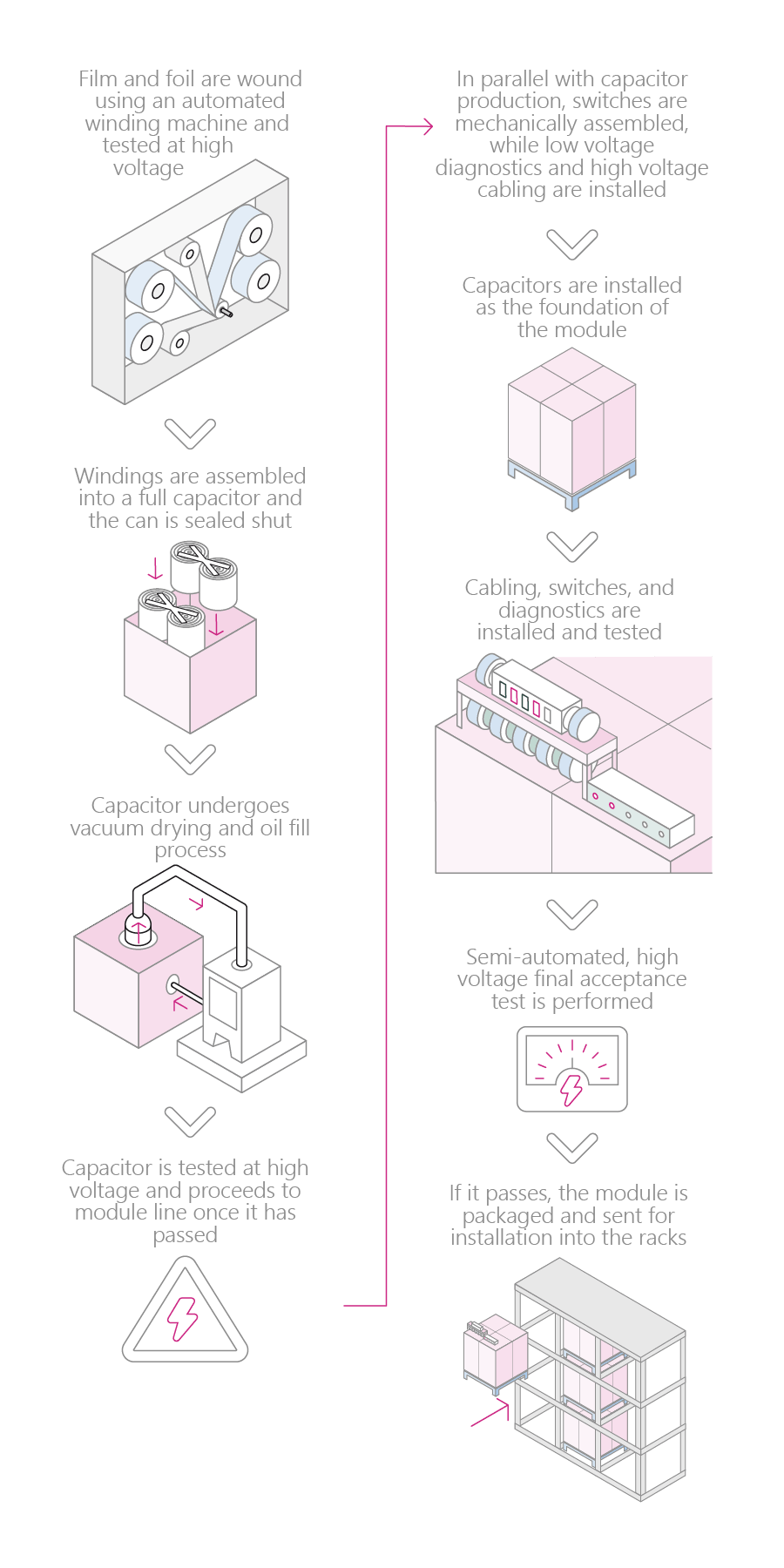
The new space, Omega, brings together winding, assembly, testing, and integration into a single system designed to scale with the company’s manufacturing needs. In addition to installing winding machines that can produce more than 100 joules worth of winding capacity per minute, we’ve also developed custom equipment that allows us to vacuum dry and fill large numbers of units in parallel, improving throughput while maintaining quality.
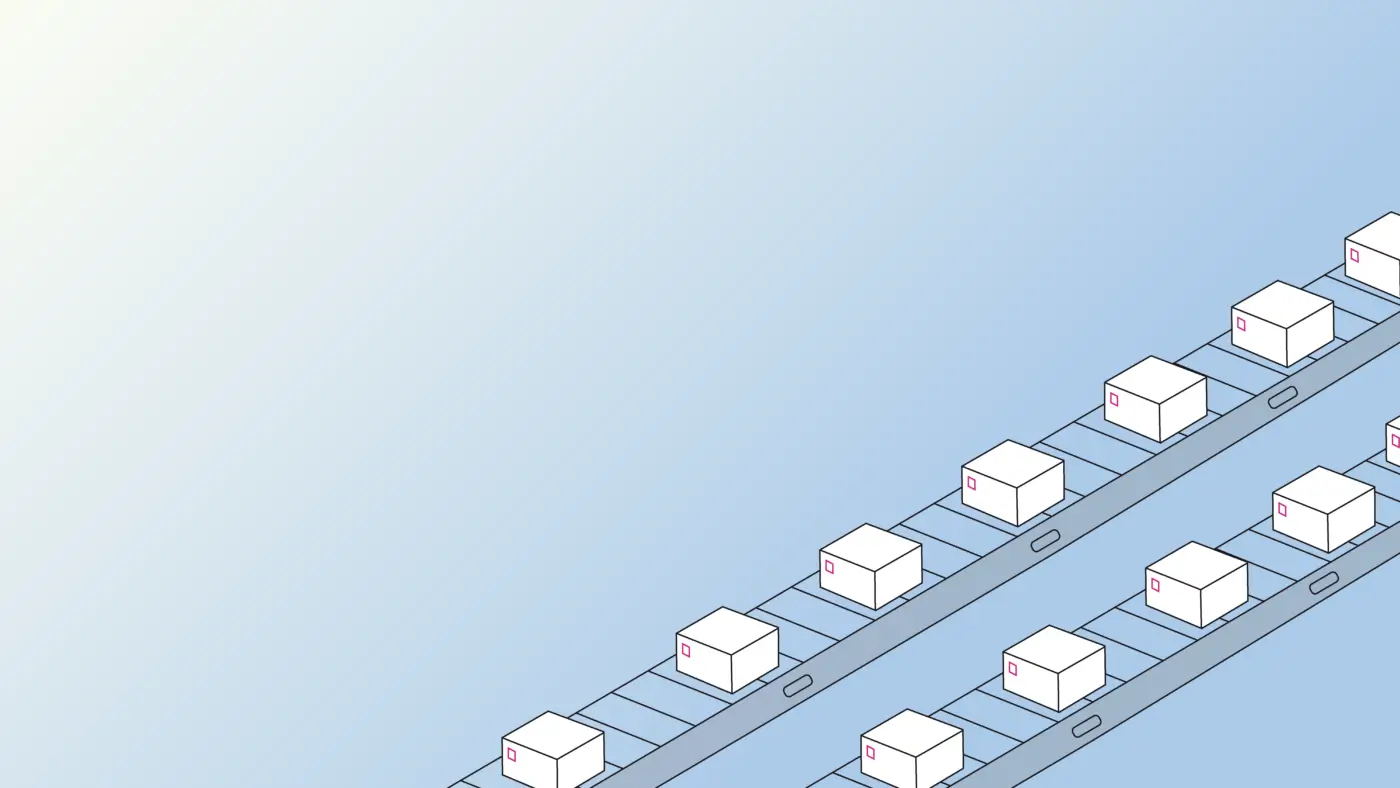
Today, Omega is being configured to produce approximately two modules per hour, quadrupling our previous production rate of one pallet every two hours. That pace is a reflection of both our engineering approach and our broader vision. We are building a system meant for commercial deployment. And that means every component, every process, every line must scale quickly.
Looking ahead
Capacitor manufacturing was already central to building machines like Polaris, but it will only get bigger. As we bring Omega online, we will need to quickly scale our production for Orion and our future power plants.
For manufacturing engineers, there’s a lot of creative freedom in designing and operating these systems that aren’t constrained by legacy requirements or methods. That freedom gives us a broad design trade space, and we get to ask the question: what’s the best way to make this at scale?
Our team members take pride in making something tangible: winding foil, soldering joints, and assembly modules that will one day start a fusion pulse. For many of us, this is the most meaningful work of our lives. If you’re looking for that kind of work and challenge, come build it with us, and make it yours too.
.png)