Why is fusion plasma pink?
September 2, 2026
Helion Team

Why is fusion plasma pink?
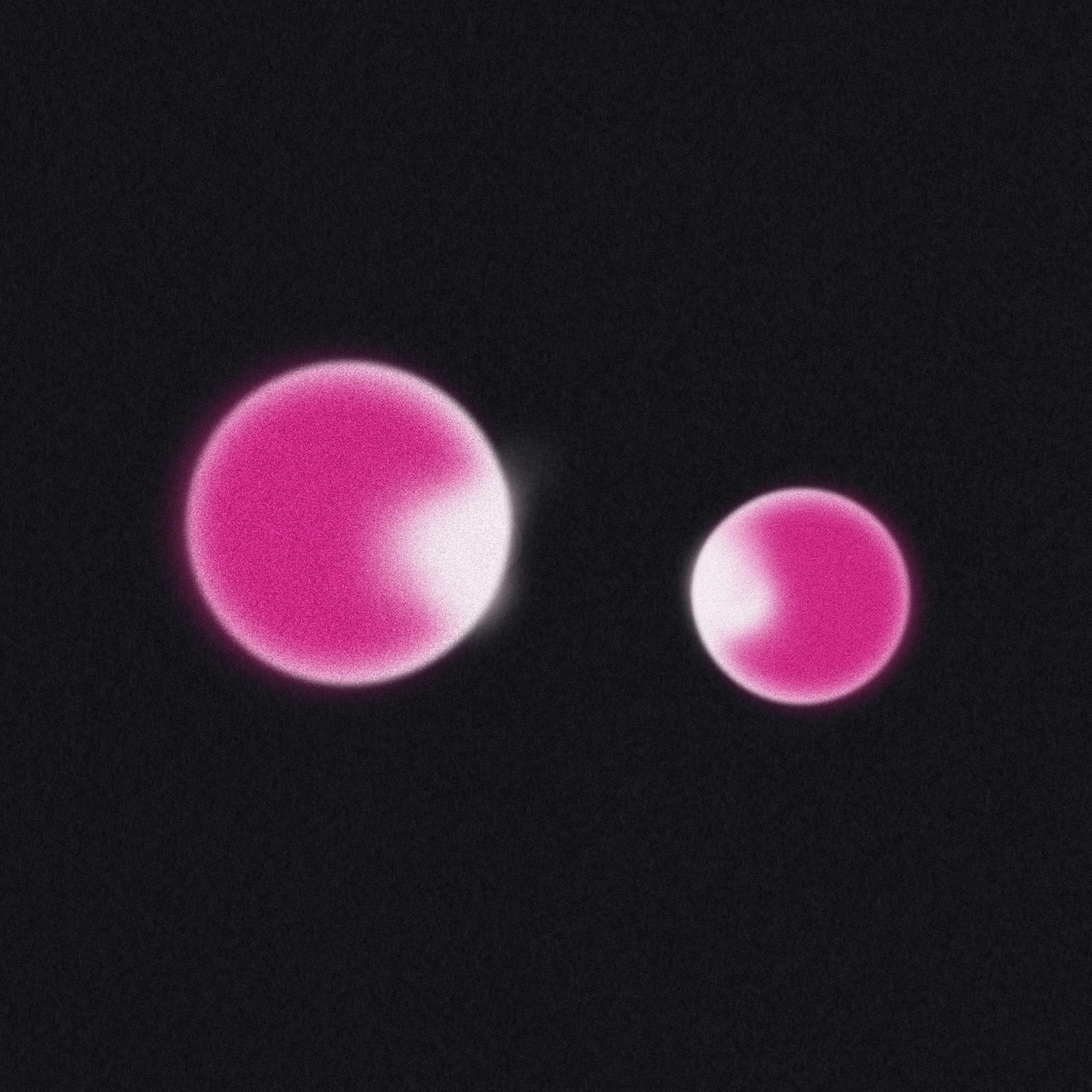
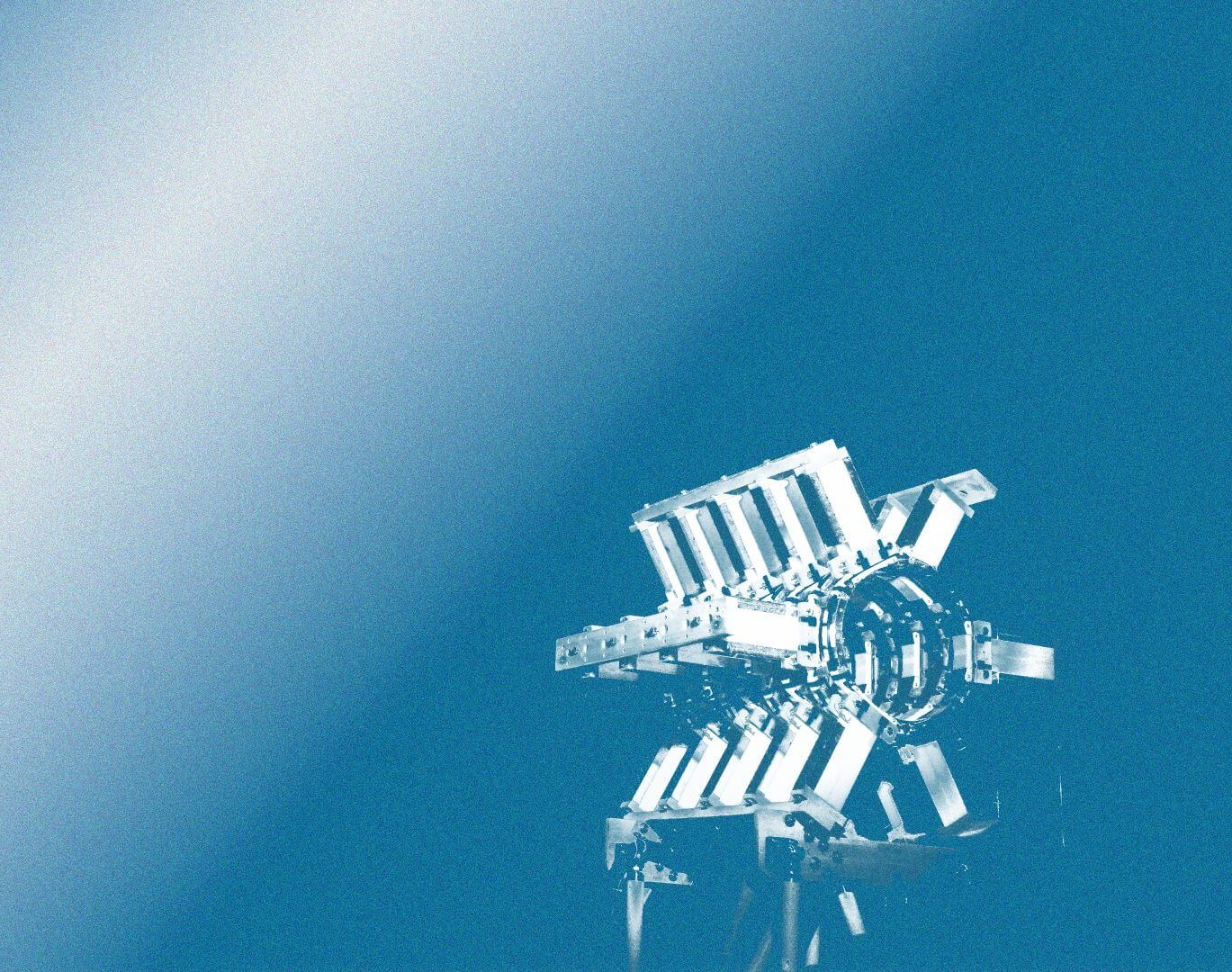
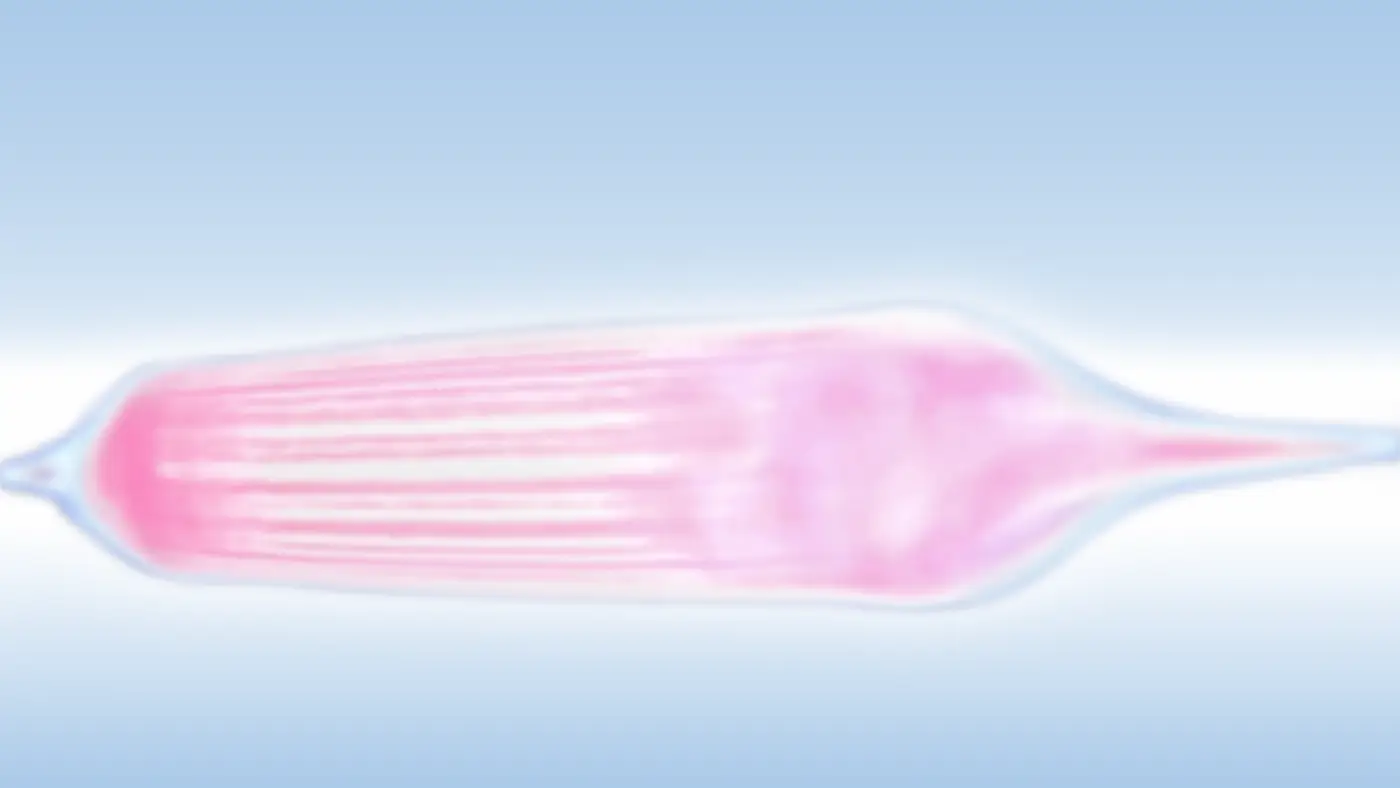
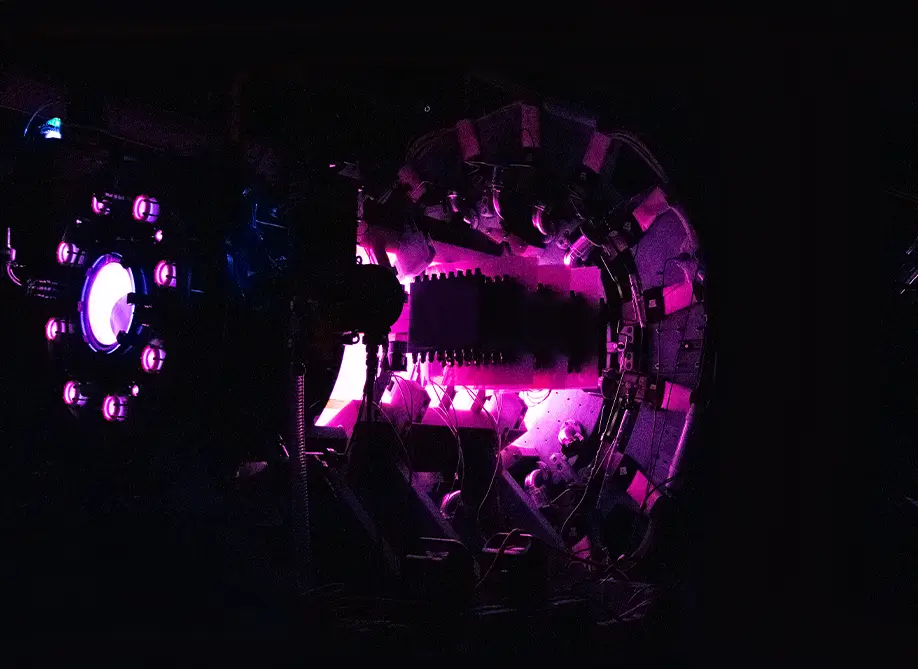
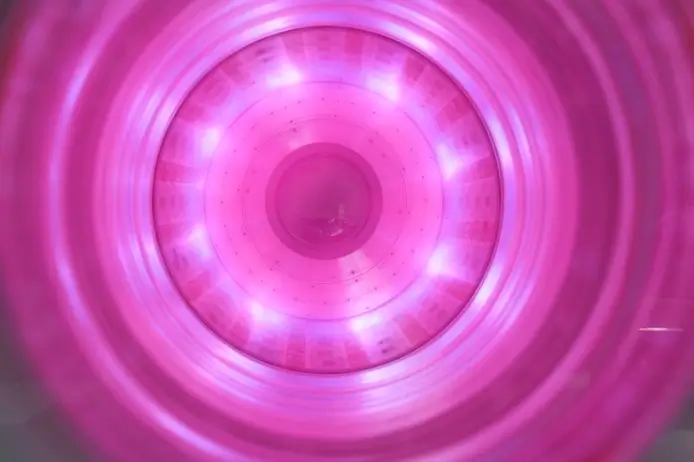
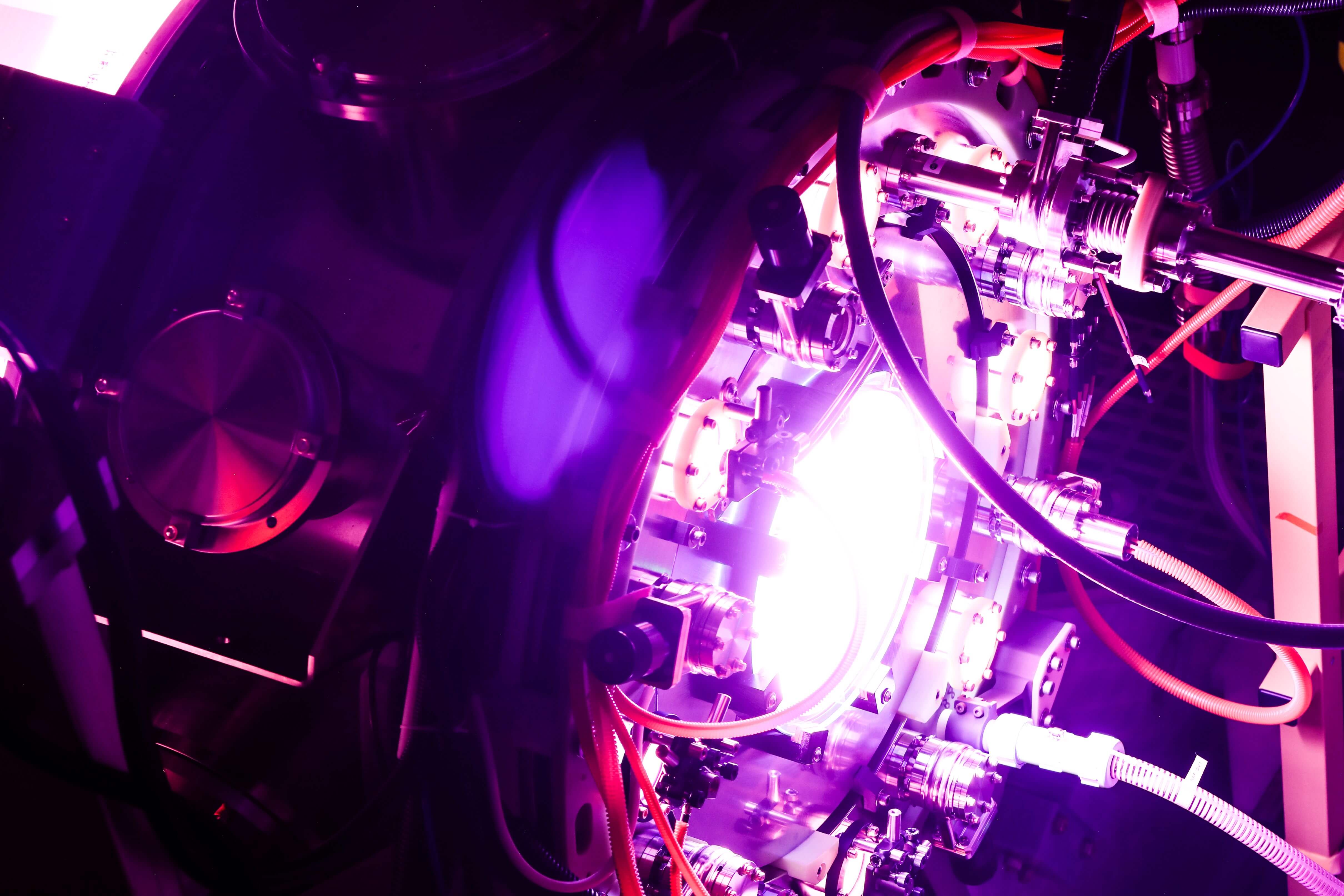
While our fusion machines are operating, they emit a fuchsia glow. This stems from the same basic phenomenon that gives fireworks their colors and neon signs their distinctive bright lights.
Helion’s pink color comes from photons emitted from the plasma and is a fingerprint of the elements that make up the plasma. Using isotopes of hydrogen as our fuel gives our plasma its pink glow. If other fusion fuels were used, the color of the plasma would be different.
What is plasma?
There are four classical states of matter. We regularly encounter water in three of these states, depending on its temperature. At low temperatures, it freezes to ice, which is a solid. At room temperature, it’s a liquid. At higher temperatures, it boils to steam, a gas.
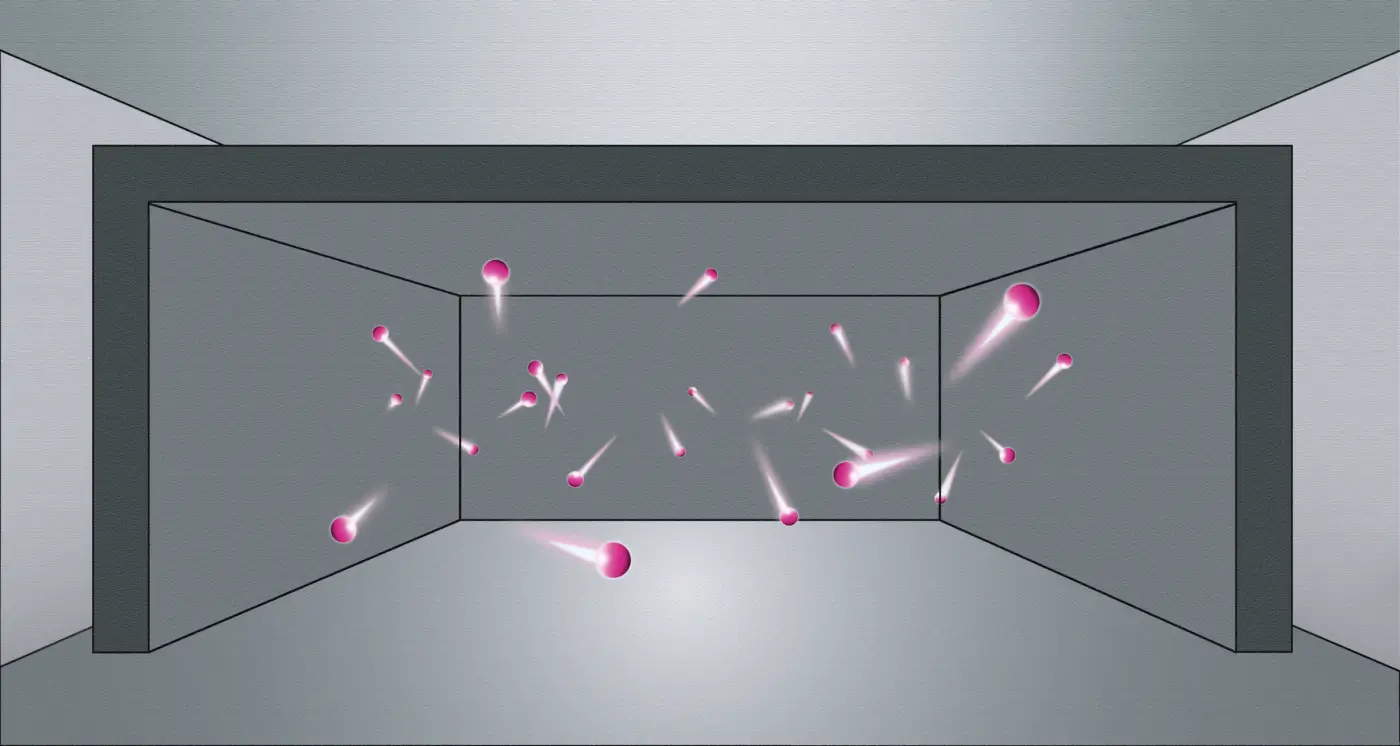
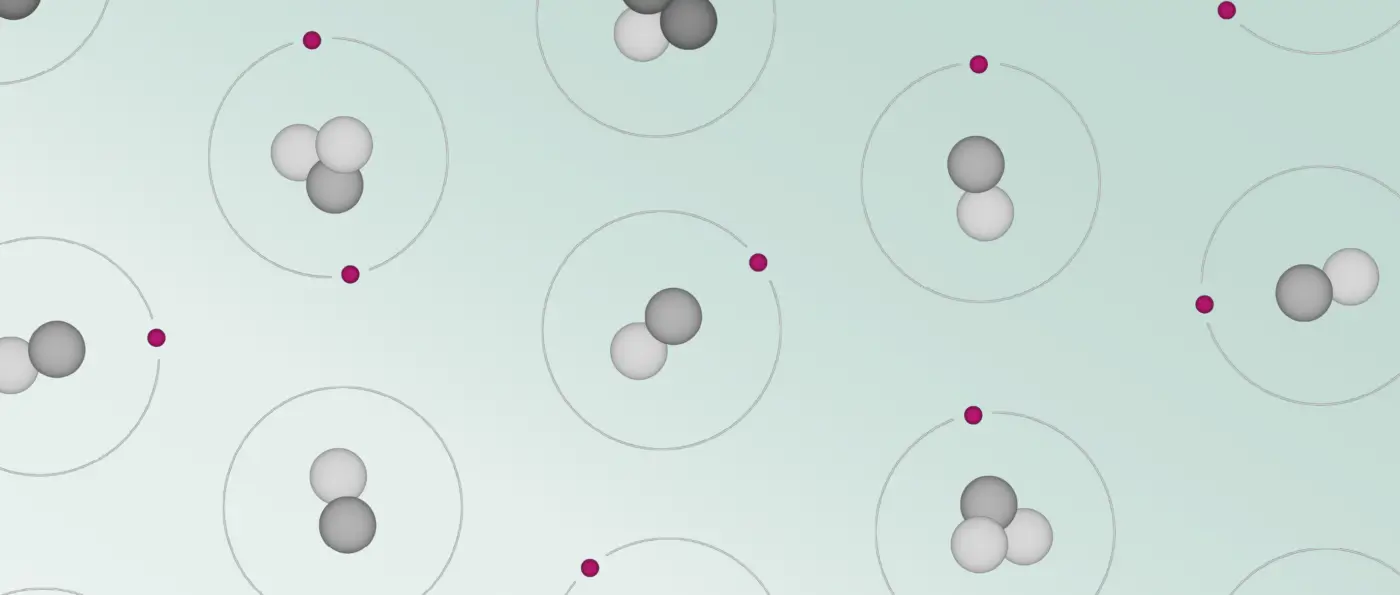
Plasma is the fourth classical state of matter. If a gas is heated to extreme temperatures, it will turn into a plasma. The gas has become so hot that some of the electrons have separated from the atoms. A plasma is like a soup of hot particles, with some of the electrons detached from the atoms. Stars, like the sun, are made of plasma. And although rare on Earth, plasma makes up over 99% of the visible universe.
Why do plasmas glow?
In a plasma, free electrons sometimes collide with the atoms. This can excite the electrons attached to the atom into higher energy levels. Free electrons also sometimes recombine with ions to form atoms, with the electrons initially in higher energy levels. These higher energy levels are unstable, so the electrons shed energy to fall back to lower energy levels. The electrons shed this energy by emitting a photon, which is a particle of light. This generally happens at the edges of the plasma. In the center of the plasma, the atoms are fully ionized, and the plasma is invisible.
Why is Helion’s plasma pink?
Electrons occupy precise energy levels. To help visualize this, an atom can be thought of as a multistory building, with the electrons only allowed on specific floors. If the electrons have sufficient energy, they can move up to higher floors, or they can shed energy to move to lower floors, but they cannot occupy the space between floors. This means that they always shed energy in discrete, or quantum, amounts.
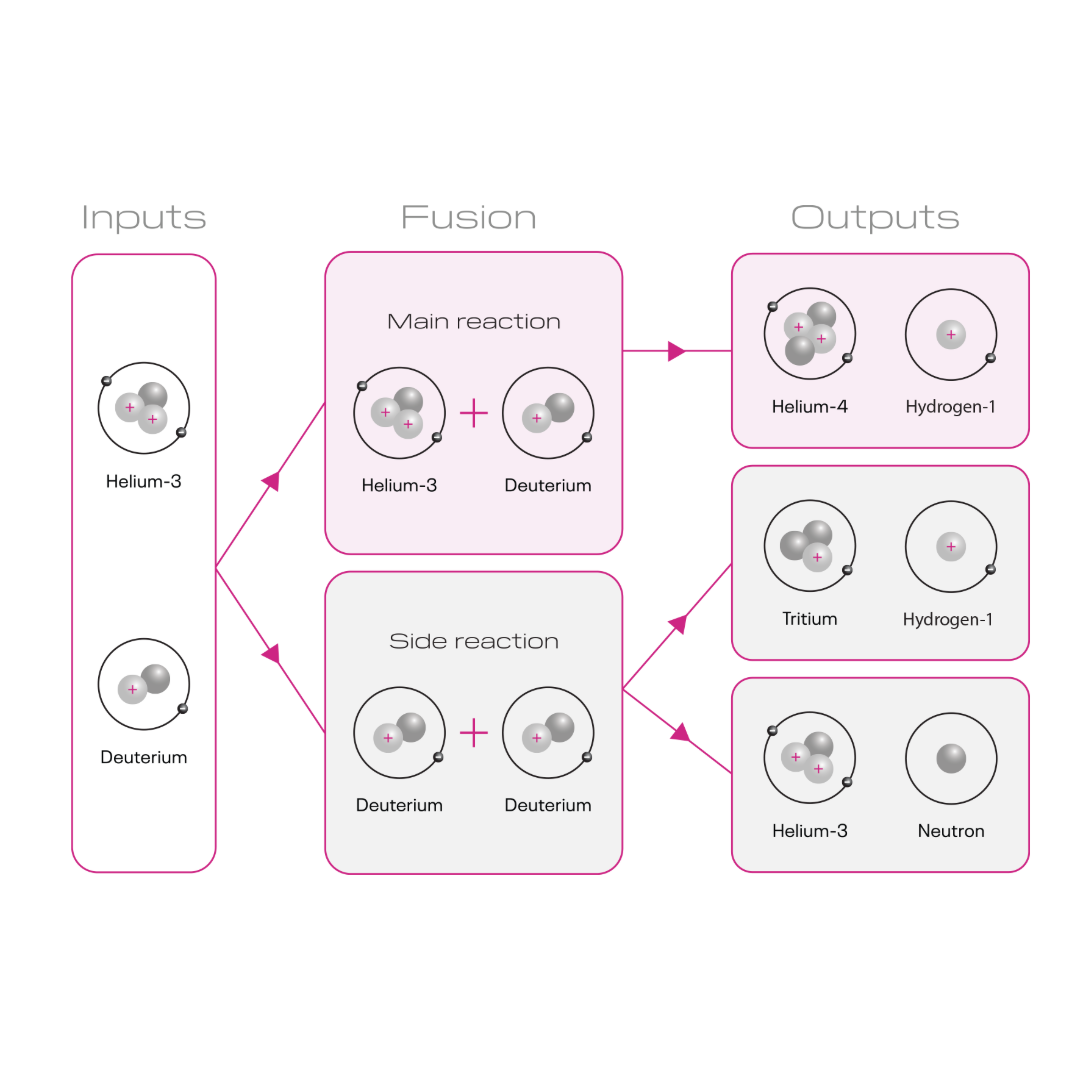
These amounts depend on the atom that the electron is part of. At Helion, we use an isotope of hydrogen called deuterium in our fusion machines. The photons released by the hydrogen in our plasma are primarily emitted at two wavelengths: 486 nanometers and 656 nanometers. The spectrum of lines produced by hydrogen is called the Balmer series.

486 nanometers is blue light and 656 nanometers is red light. Our brains combine this red and blue to give a pink color.
What about other colors?
Since the wavelength of light emitted depends on the atom, different elements emit different colors. Each element will emit photons at a few precise wavelengths, giving each one a unique fingerprint known as spectral lines. These can be used to identify different elements.
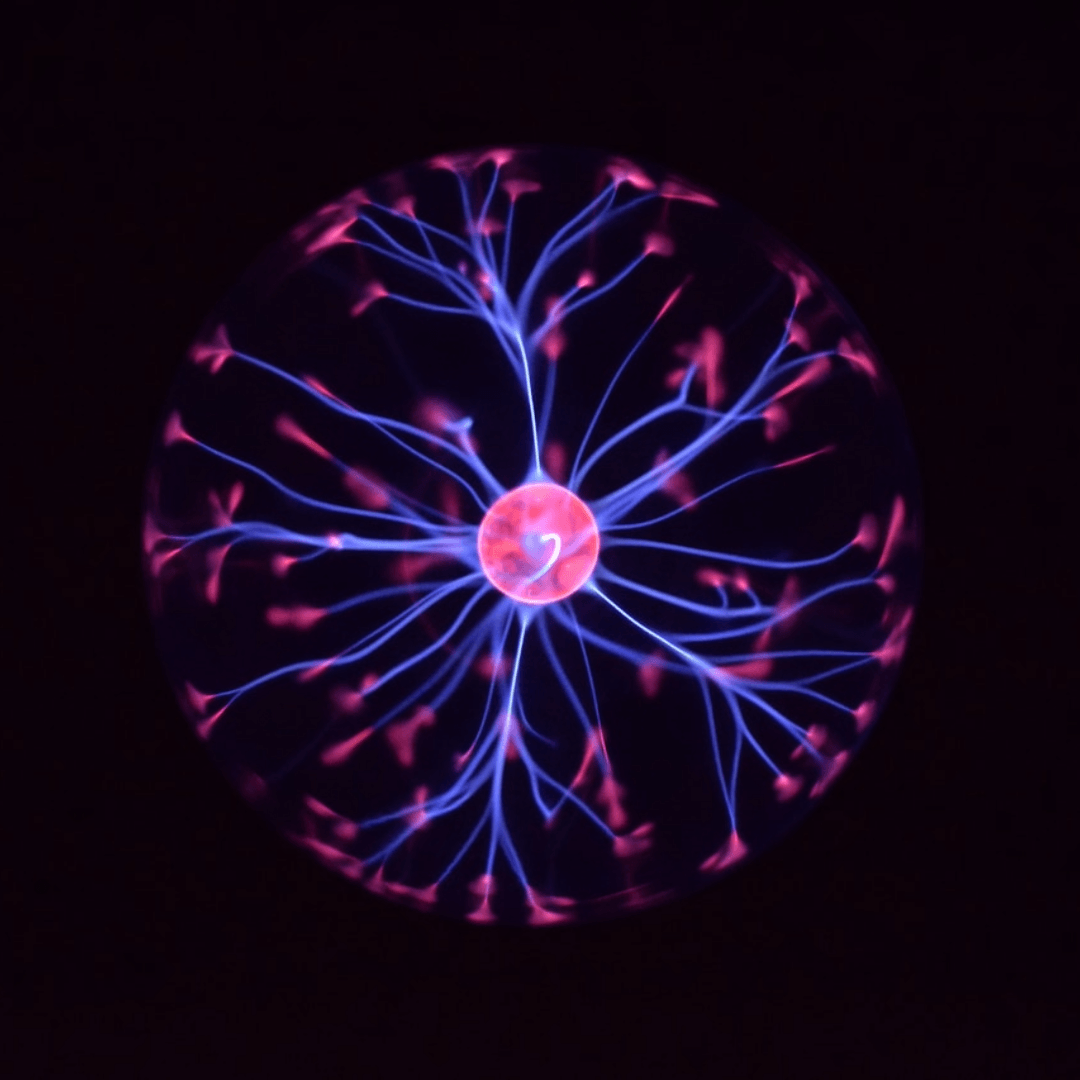
The distinctive red glow of a traditional neon “EXIT” sign comes from neon plasma glowing. Argon plasma glows a light purple, which is sometimes seen at the edges of Tungsten Inert Gas (TIG) welding arcs. The yellow-orange color of old streetlights comes from sodium plasma. Plasma globes often use a mixture of neon, krypton, and xenon to give their colorful arcs.
While not using plasma, fireworks also make use of this phenomenon. The heat of the explosion excites electrons, which emit photons as they relax back to lower energy levels. Fireworks are filled with different materials to give different colors, such as strontium for reds, copper for blues, and potassium for purples.
A color signature
The colors, or wavelengths of light, emitted from a plasma can be monitored via spectroscopy to understand what is happening in the machine and detect any anomalies. For example, helium produced from the fusion of deuterium and tritium shows a strong yellow-orange color, and if any impurities entered the plasma, these would also emit different colors. The fuchsia glow from our plasma is one sign that our fusion machines are working as intended, and that’s why we chose pink as the color of our logo.

.png)